
 Report Problem
 Translate
In Kentucky, bourbon tastings are a signature experience. In fact, they drew 2.7 million visitors to the Kentucky Bourbon Trail® in 2025, according to the Kentucky Distillers’ Association. Instead of sniffing and sipping bourbon, Louisville Water offers a tasting experience of its own – one that invites guests to slow down and think differently about something they enjoy every day: their drinking water.
So, what exactly happens at a Louisville Water tasting?
First, a shift in perspective
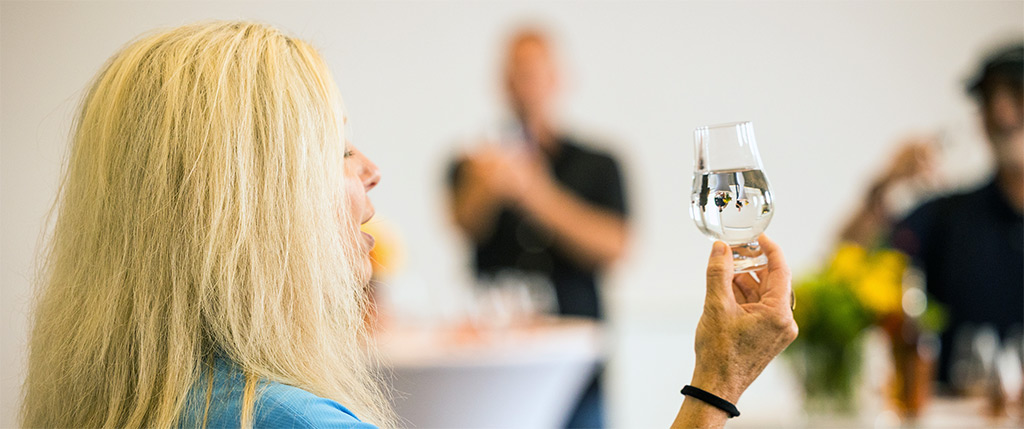
A water tasting isn’t about ranking your favorite glass or proving you have a refined palate. It’s about learning how water gets its taste – and why it can vary from source to source. Guests are encouraged to pay attention to how water looks, smells, and tastes, just like they would with bourbon or wine.
That focus on aesthetics isn’t new. Since the 1930s, Louisville Water has believed that great‑tasting water matters just as much as safe water.
A tradition rooted in taste—and science
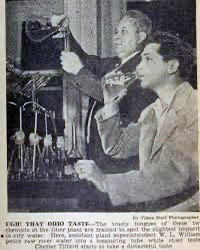 In the early days, Louisville Water employed a chief taster. Company lore tells of Chester Tilford, who would swish and spit raw Ohio River water up to 30 times a day – using a palate so refined that legend claims he could detect a catfish miles upstream.
Much like a master distiller, Tilford served as a frontline defense for the city’s drinking water. Beyond safety, he obsessed over aesthetics, ensuring the water delivered to homes was something people truly enjoyed drinking.
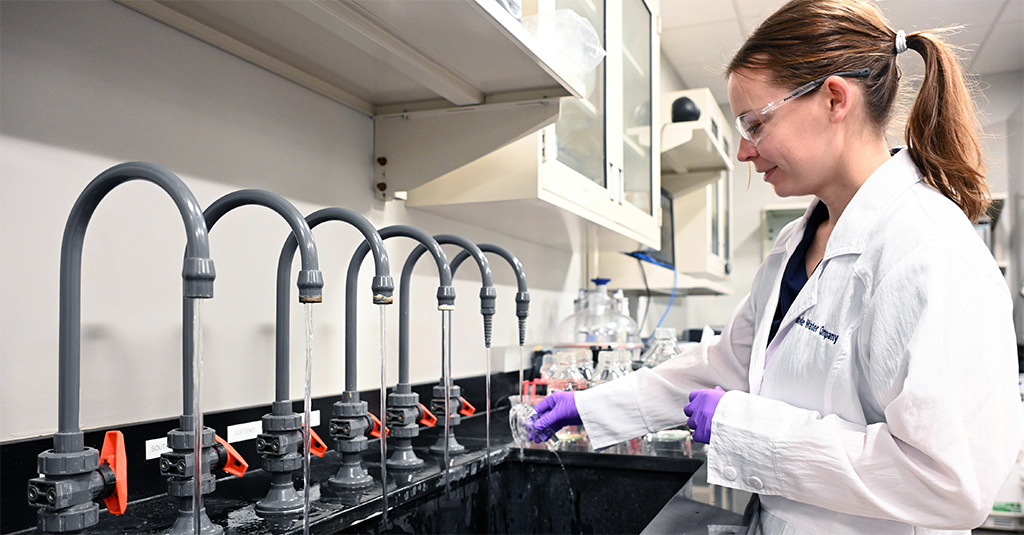
Today, that role belongs to Louisville Water’s scientists. In the lab, they run hundreds of tests daily and still finish the process with a human taste test – combining modern science with the same attention to flavor that guided the utility nearly a century ago.
“We like to say, ‘You’ll never look at a glass of water the same after one of our water tastings,’” said Kelley Dearing Smith, Louisville Water’s vice president of communications and marketing. “There’s a story in every drop.”
What the tasting looks like
Much like a bourbon flight, a Louisville Water tasting typically includes four different waters. Guests sample a mix of bottled and tap waters, poured side by side for easy comparison.
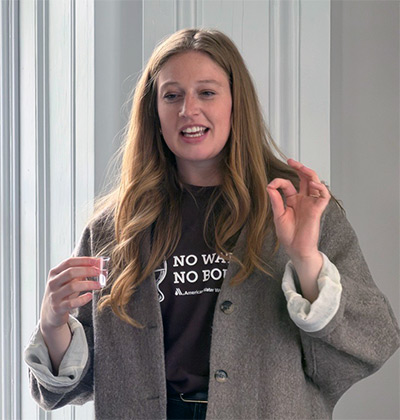
Before tasting, the guide explains an important rule: the goal is not to decide which water is “best.” Instead, the focus is on understanding why different waters taste the way they do.
That lesson quickly turns to science and chemistry. Water picks up characteristics from the environment it travels through. Limestone can contribute a subtle sweetness, while other rock types may add a more mineral‑forward profile. These differences are often measured using total dissolved solids (TDS), which reflect the minerals present in a given water source.
Environmental factors matter, too. Algal blooms in rivers and lakes, for example, can introduce earthy or musty flavors – another reason taste testing plays such a critical role in monitoring water quality.
A tasting in action
During a recent Louisville Water tasting for the Kentucky Distillers’ Association Leadership Academy –a group of rising industry professionals – the lineup included Dasani, Kentucky American Water, Gerolsteiner sparkling water, and Louisville Pure Tap®.
Participants were instructed to sniff each glass before taking a sip. Unlike a bourbon tasting, where liquid lingers on the tongue, guests were encouraged to sip and swallow – focusing on mouthfeel, aftertaste, and any lingering flavors.
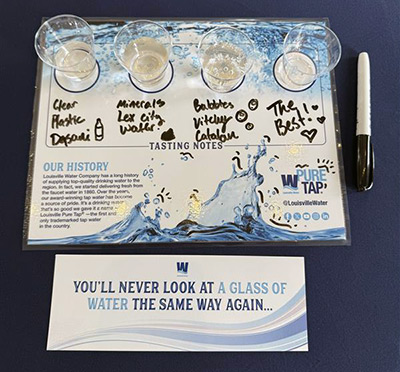 “What’s the mouthfeel like for this water?” asked guide Hayley Robb Price. “Is there an aftertaste? A lingering flavor?”
The room quickly filled with observations: “plasticy,” “bubbly,” “salty,” and “mineraly.” Guests also jotted down notes on tasting mats provided during the session.
Again, the exercise wasn’t about crowning a winner. It was about building an understanding of the factors – natural and human‑controlled – that shape every glass of water.
What you’ll take away
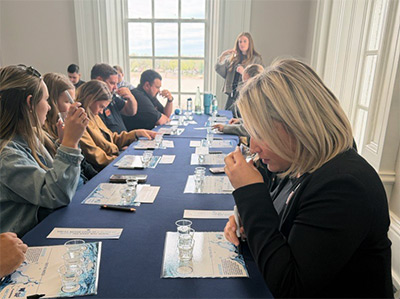 By the end of a Louisville Water tasting, guests often realize they’ve never paid this much attention to water before. That’s exactly the point.
Especially during Drinking Water Week, Louisville Water hopes tastings encourage people to think differently about their tap water – and to appreciate the professionals, science, and innovation behind every drop.
Want to arrange a tasting?
Groups interested in scheduling a water tasting and tour of Louisville Water Tower can reach out to Kelley Dearing Smith at ksmith@LouisvilleWater.com.