
 Report Problem
 Translate
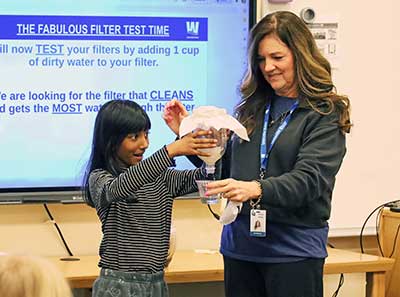 “Now you’re going to build your own water filters.”
That’s what Louisville Water educator Rhonda Dazley told a group of fourth graders at Lowe Elementary School.
“Yes!” several students exclaimed, and there were smiles all around the room.
Dazley shared how important filters are to the water treatment process. She gave the students a little history of Louisville Water and explained that filters are important not only for taste and appearance but also to make sure water is safe for the community to drink.
Now it was time for the students to design, build, and test their own filters. They got to choose from various materials, including sand, cotton balls, sponges, rocks, and netting. Then they stuffed three of their chosen items into a coffee filter and observed how well their filters worked when Dazley poured dirty water through them.
“I love this lesson because the students get to design a filtration system as a group after learning how we use filtration at the water company,” Dazley said. “I love their eagerness and desire to design and test their systems.”
Testing the Filters
The students discovered that some materials were good at trapping dirt, but they also blocked water flow. Other materials captured only larger debris. Some of the students’ designs actually did a pretty good job of cleaning the water.
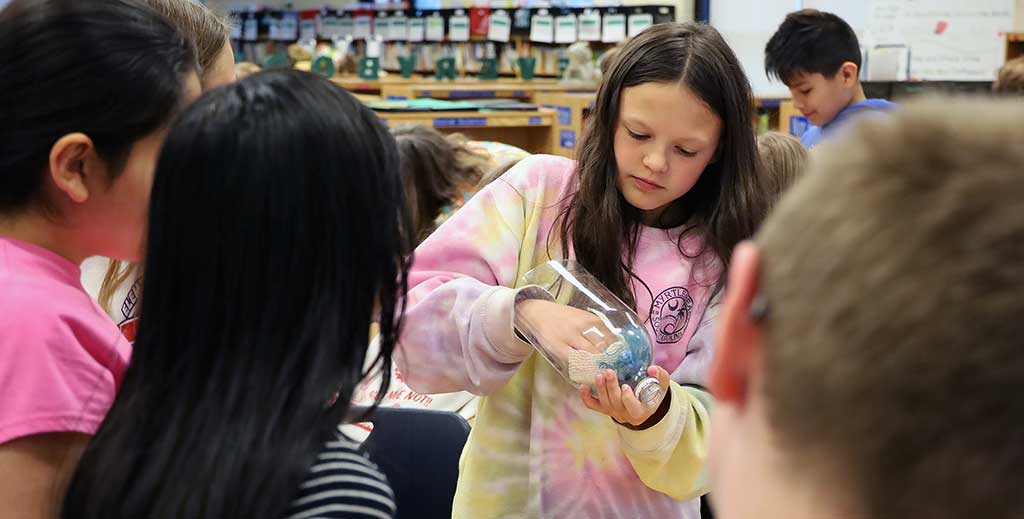
Linda Wrins-Ryan, Lowe Elementary library media specialist, said the students “respond very positively to hands-on learning experiences. Engaging lessons leave a lasting impression by fostering curiosity and excitement while promoting collaboration, teamwork, and critical thinking skills.”
The filter lesson gave the students “a deeper understanding of how waste negatively impacts river water quality and the broader environment,” she said. “They also learned how human activity affects marine ecosystems and wildlife. Additionally, the experience empowered them to take action by designing and creating filtration systems as a practical solution to pollution.”
The Effects of Plastic Pollution
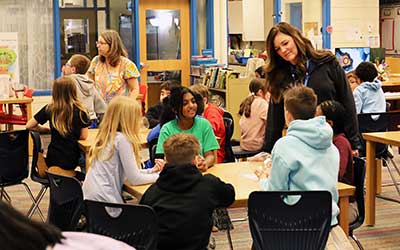 Wrins-Ryan pointed out that the lesson complemented a library research project called “The Problem with Plastic,” which is, of course, an appropriate area of study any time of the year but is especially relevant during Earth Month.
“The students’ research focuses on the impact of plastic pollution on marine wildlife, while the filter lesson reinforces this learning by demonstrating how plastic contributes to contaminants in river water,” she said. “Together, these lessons provide a cohesive learning experience—connecting research with practical application—and keep students actively engaged throughout the process.”
Because the process combined hands-on experimentation with meaningful research, Lowe Elementary students gained not only scientific knowledge but also the motivation to tackle real-world environmental challenges.